

Pick Anthropic when your workload centers on agentic coding, long-document analysis, or any task where trust and predictability matter more than flash. Pick OpenAI when you need multimodal breadth, a mature consumer-facing ecosystem, or the widest possible surface of tools under one roof. Most serious engineering teams don't choose one and walk away. They route work to both. The sections below explain exactly how to make that call on your own data.
TL;DR:
- Anthropic models excel at long-context recall, safety, and conservative responses, making them ideal for agentic coding and complex reasoning tasks.
- OpenAI models provide broader multimodal capabilities, consumer-oriented tools, and layered access through various service packages suited for diverse app deployment.
- Pricing varies based on workload and tier routing, with cost-efficiency achieved by directing routine tasks to lower tiers and reserving premium models for reasoning-intensive operations.
- Successful integration relies on pilot testing with your actual data, side-by-side comparison of accuracy and costs, and building multi-provider routing to avoid vendor lock-in.
- Cloud platform choice and enterprise agreements (Azure for OpenAI, AWS or Google for Anthropic) significantly impact procurement, compliance, and long-term strategy.
Table of Contents
- Which Model Family Fits Your Workload: OpenAI vs Anthropic?
- How Do Safety Design and Long-Context Recall Compare?
- What Does OpenAI vs Anthropic Pricing Actually Look Like?
- Which Platform Has Better Developer Tooling for Agents?
- What Enterprise and Cloud Options Should You Check First?
- How Should Teams Run a Pilot Before Choosing?
- Proud Lion Studios' Take on Choosing and Integrating a Model
- What the OpenAI vs Anthropic Debate Gets Wrong
- Ready to Build Your AI Pilot? Here's the Faster Path
- Sources
- FAQ
Which Model Family Fits Your Workload: OpenAI vs Anthropic?
The fastest way to shortcut this decision is to map the model tiers to the job, not the vendor's marketing copy. Anthropic and OpenAI both ship a spread of models from budget to frontier, and the right pick depends entirely on what you're asking the model to do.
Anthropic's Claude lineup:
- Claude Opus — built for agentic coding and long-document analysis, with the strongest long-context recall in the Claude family. This is the model teams reach for when a task involves reasoning across a codebase or a 200-page contract.
- Claude Sonnet — the workhorse tier for everyday coding and document Q&A, tuned to balance cost against capability so it doesn't burn budget on routine tasks.
- Claude Haiku — the low-cost option for background classification and extraction jobs where speed and price matter more than depth.
- Claude Fable — Anthropic's premium frontier model, reserved for the hardest reasoning and research-grade problems where the answer has to be right the first time.
OpenAI's GPT and ChatGPT lineup:
- GPT-5.6 Sol — the flagship, built for broad multimodal generation and consumer-grade assistants that need to handle text, images, and more in one session.
- GPT-5.6 Terra — the mid-tier balance point for production apps that need solid performance without flagship pricing.
- GPT-5.6 Luna — the budget tier, designed for high-volume, low-complexity chat and background processing at the lowest price floor in the lineup.
- GPT-5.5, GPT-5.4, and GPT-4.1 — earlier generations still running in production, often kept alive for regulated workloads or legacy integrations where switching models means re-certifying behavior.
On the consumer and team side, OpenAI packages access through ChatGPT, ChatGPT Plus, ChatGPT Go, ChatGPT Pro, ChatGPT Business, and ChatGPT Enterprise, each aimed at a different scale of deployment, from a single power user to a company-wide rollout with admin controls.
Third-party comparisons consistently frame this split the same way: Claude models test stronger on long-context recall and instruction following, while OpenAI's models test stronger on multimodal breadth and consumer polish. That framing holds up across most published evaluations, and it's the single most useful filter for a first-pass decision.
If your task is "read this entire repository and refactor it," start with Claude. If your task is "generate an image, transcribe a voice memo, and summarize it in one thread," start with GPT-5.6 Sol.
How Do Safety Design and Long-Context Recall Compare?
Anthropic built its entire company thesis around AI safety research, and that shows up directly in how its models behave. The company's own mission pages frame safety as a research priority, not a compliance afterthought, and that priority shapes the model's day-to-day behavior: more conservative refusals, more consistent instruction-following, and fewer surprises when a prompt sits near a policy edge.
Anthropic's flagship safety mechanism is Constitutional AI, a training approach that has the model critique and revises its own outputs against a set of written principles rather than relying purely on human feedback labels. Paired with the Model Context Protocol, which standardizes how models connect to external tools and data sources, Anthropic's stack is designed around reversibility. If a tool call goes wrong, MCP's structure makes it easier to trace and roll back, which matters enormously once you're running autonomous coding agents against production systems.
OpenAI's approach leans more heavily on reinforcement learning from human feedback (RLHF) combined with extensive red-teaming before release. That process has matured across every GPT generation, but it optimizes for a different goal: shipping broad capability fast, then patching edge cases as they surface in the wild. The trade-off is real. You get a wider feature set sooner, at the cost of occasionally less predictable refusal behavior compared to Claude's more conservative defaults.
- Claude models tend to hold context accurately across very long documents, a trait multiple platform comparisons point to when recommending Claude for contract review and codebase analysis.
- GPT-5.6 narrows that long-context gap compared to earlier GPT generations, though independent testing on document-length recall is still catching up to the claims.
Quick fact: Anthropic's safety-first design philosophy, including Constitutional AI, is the reason enterprise buyers with compliance requirements often shortlist Claude first, even before comparing raw benchmark scores.
What Does OpenAI vs Anthropic Pricing Actually Look Like?
Neither vendor publishes a single number that tells the whole story, because the real cost of running either platform depends on how you route traffic across tiers. The pattern that works for most teams: send the bulk of routine, high-volume requests to the cheapest model that can still do the job correctly, and reserve the flagship tier for the fraction of tasks that genuinely need it.
- Route simple classification, tagging, and extraction to Claude Haiku or GPT-5.6 Luna, where the price floor is lowest.
- Route standard coding and document work to Claude Sonnet or GPT-5.6 Terra, the balanced middle tiers built for exactly this load.
- Reserve Claude Opus, Claude Fable, or GPT-5.6 Sol for the reasoning-heavy or multimodal tasks where a cheaper model's error rate would cost more than the model itself.
Anthropic advertises explicit prompt caching tiers, which matters a lot more than it sounds. A persistent coding agent that re-sends the same system prompt, file context, or tool definitions on every call can burn through budget fast without caching. Anthropic's caching structure lets repeated context get billed at a steep discount on subsequent calls, which is a meaningful line item once an agent runs continuously rather than answering one-off questions.
Vendor pricing pages and third-party rate cards change often enough that quoting an exact number here would be stale within a quarter. What stays true regardless of the specific figures: pricing and feature sets shift constantly, and any published price comparison is a snapshot, not a contract. Budget for movement, and build your cost model around usage patterns rather than a fixed per-token number you saw in a blog post.
Which Platform Has Better Developer Tooling for Agents?
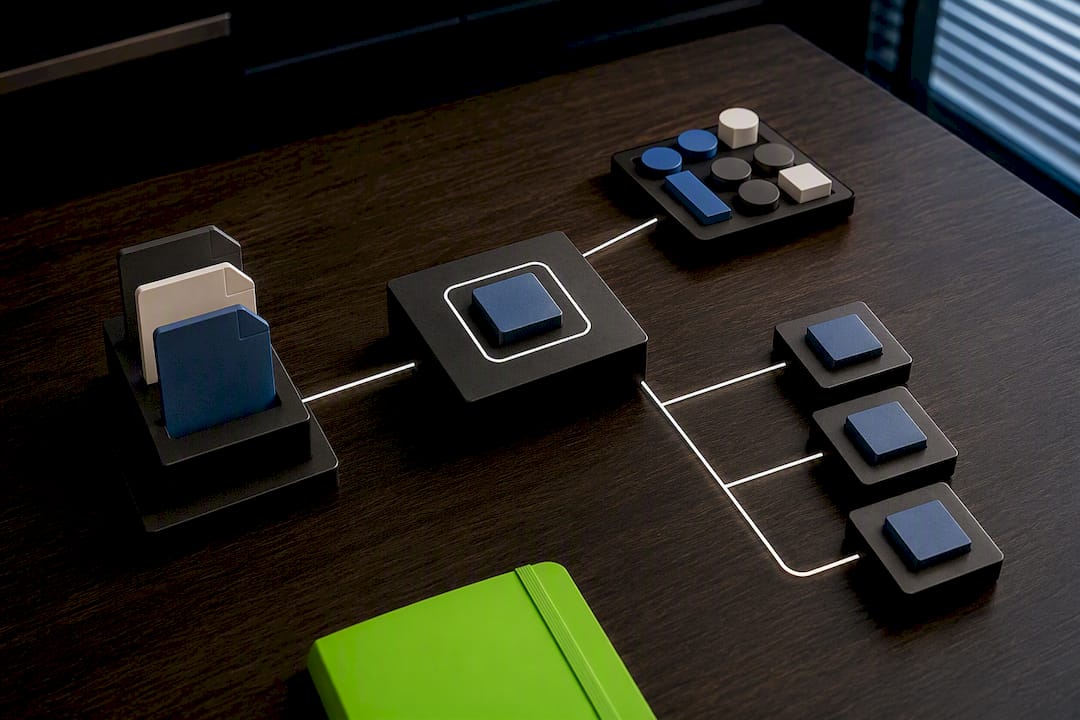
Claude Code is Anthropic's clearest developer advantage, and it's a genuinely different paradigm from most cloud-hosted assistants. It runs as a local-first terminal tool, meaning it operates directly against your file system rather than routing everything through a hosted chat interface. It maintains persistent memory through a CLAUDE.md file that stores project context across sessions, and it supports a sub-agent model where a primary agent delegates focused tasks to smaller, specialized agents working in parallel.
Developer-focused coverage in 2026 consistently points to Claude Code as the more mature local-first coding agent, and recommends routing code-heavy workflows there specifically because of that local execution model. It cuts latency, keeps sensitive code off a hosted endpoint by default, and gives the agent direct filesystem access without an API round-trip for every file read.
OpenAI takes a different, broader route. Its tooling spans the Assistants API, native function calling, a plugin ecosystem, and Codex-style coding agents, giving you more surfaces to build on but also more integration decisions to make upfront.
- Claude's SDKs lean toward clean TypeScript types and predictable streaming behavior, which developers frequently cite as reducing debugging time on function-calling chains.
- OpenAI's SDK coverage is broader across languages and frameworks, reflecting its larger install base and longer public API history.
- Error handling patterns differ enough between the two that a shared abstraction layer saves real engineering time if you're routing between both.
Pro Tip: If you're building an autonomous coding agent from scratch, prototype it in Claude Code first. The local-first model surfaces filesystem and permission issues early that a cloud-hosted assistant will hide until production.
What Enterprise and Cloud Options Should You Check First?
Cloud distribution shapes procurement more than almost any other factor on this list, because it determines which contract, which data residency terms, and which compliance paperwork you're already working with. OpenAI's models run natively through Microsoft Azure, which matters enormously if your company already has an Azure enterprise agreement and wants to avoid a second vendor relationship. Anthropic's models are available through AWS Bedrock and Google Vertex AI, which fits teams already standardized on either cloud.
Multiple analyst comparisons treat this cloud alignment as a deciding factor on its own, before a single benchmark score enters the conversation, because switching cloud providers to access a model is rarely worth the migration cost.
Before signing anything, confirm these enterprise essentials:
- Service-level agreements (SLAs) covering uptime and response time guarantees.
- A signed Data Processing Agreement (DPA) if you handle regulated or customer data.
- Fine-tuning availability for your specific model tier, since not every tier supports it.
- Team management and role-based access controls for ChatGPT Business or Enterprise-equivalent Anthropic deployments.
The safest long-term move is building a thin abstraction layer or router in front of both providers. It costs a little engineering time upfront, but it means a pricing change, a policy update, or an outage on one vendor never becomes an outage in your product.
How Should Teams Run a Pilot Before Choosing?
Public benchmarks and price sheets tell you almost nothing about how a model performs on your actual data. The only reliable evaluation is a direct, side-by-side pilot, and most credible platform comparisons say the same thing: test on your own representative dataset before committing.
- Pull a representative sample of your real workload, not a toy dataset. Include edge cases you already know are hard.
- Implement the identical prompt or workflow on both a Claude tier and a GPT tier, changing nothing but the model.
- Measure accuracy, hallucination rate, latency, and per-task cost side by side for each vendor.
- Negotiate pilot-specific contract terms, including a trial SLA and a signed DPA before any customer data touches either system.
- Confirm your target cloud contract, Azure for OpenAI or Bedrock/Vertex for Anthropic, aligns with what you already have signed.
Pro Tip: Build your experiment matrix by workload type first: coding agents get measured on task completion and error rate, long-document analysis gets measured on recall accuracy, and multimodal apps get measured on output quality across formats. A single blended score across all three hides which vendor actually wins where.
Proud Lion Studios' Take on Choosing and Integrating a Model
Our approach at Proud Lion Studios starts with the same principle every credible comparison lands on: pilot on real data before committing to either vendor. We build multi-provider routing into client integrations from day one, because workload-based routing between Claude and GPT tiers consistently outperforms a single-vendor bet, especially once a project scales into enterprise cloud environments with existing Azure or AWS commitments. Teams evaluating a pilot can review our enterprise AI roadmap for a deeper look at structuring that first phase.
What the OpenAI vs Anthropic Debate Gets Wrong
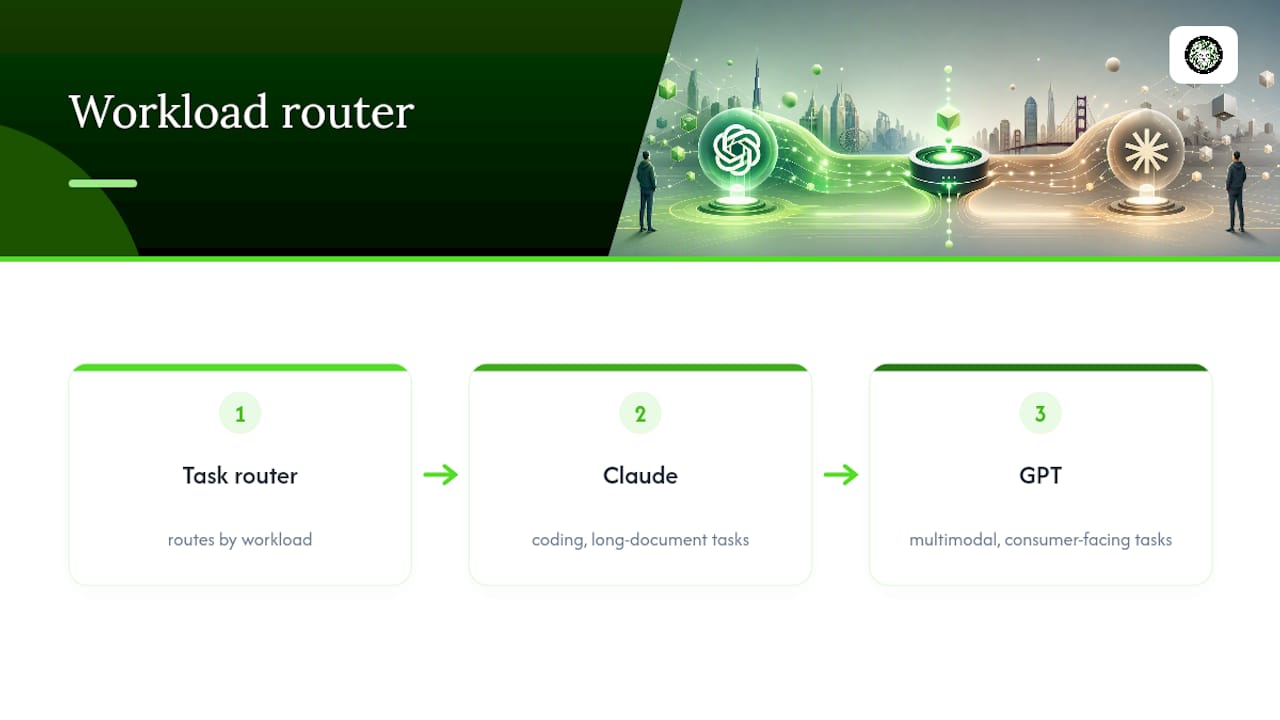
Most coverage of the OpenAI vs Anthropic debate treats it as a horse race, as if one company is going to "win" and the other becomes irrelevant. That framing doesn't survive contact with how production teams actually operate. The teams getting the most value out of either platform aren't loyal to one vendor. They're running a router that sends coding-heavy and long-document tasks to Claude and multimodal or consumer-facing tasks to GPT, often inside the same product.
The bigger mistake I see is teams anchoring on public benchmark leaderboards instead of their own data. A model that leads a generic coding benchmark can still underperform on your specific codebase's conventions, and a model with a lower headline score can still handle your document format better than the "winner" does. Benchmarks measure averages. Your workload is not an average.
What should get more attention than it does: the safety and reversibility design baked into Anthropic's architecture isn't just a compliance checkbox. It's a real operational advantage once you're running autonomous agents against production systems, because traceable, rollback-friendly tool calls save you when, not if, an agent does something you didn't expect.
— Amal
Ready to Build Your AI Pilot? Here's the Faster Path
Choosing between Claude and GPT tiers is only half the problem. The harder part is wiring either one into a real product, with the routing logic, agent permissions, and cloud contracts that turn a model API into something your team can actually rely on. Proud Lion Studios builds exactly that: pilot integrations that test both providers against your real workload before you commit budget to either one.
Our technical team designs multi-provider routing, agent permission layers, and cloud-aligned deployments as part of custom AI tools and automation solutions, so you're not locked into a single vendor's roadmap six months after launch. If you're weighing a coding agent build, a long-document analysis tool, or a multimodal customer-facing app, start with a scoped pilot rather than a full commitment. Reach out through our blockchain development services page to discuss how a Proud Lion Studios integration pilot fits your architecture, and get a working prototype in front of your team before you sign anything long-term.
Sources
- Anthropic vs. OpenAI: What's the Difference? — Coursera
- OpenAI Vs Anthropic IPO: How They Compare And What ... — Forbes
- OpenAI vs Anthropic in 2026 - Models, Tools, and Developer Experience — Developers Digest
FAQ
Which Is Bigger, OpenAI or Anthropic?
OpenAI remains the larger, more widely adopted consumer brand, though Forbes reporting notes Anthropic has shown faster growth in recent funding rounds.
Will Anthropic Overtake OpenAI?
No published data supports a clear overtaking scenario yet. Anthropic leads on trust-sensitive enterprise segments like coding agents and long-context work, while OpenAI leads on consumer scale and multimodal breadth, so the two are competing on different fronts rather than the same one.
Is OpenAI Losing to Anthropic?
Not by the numbers available. OpenAI remains the larger consumer brand, but Anthropic has carved out a strong, faster-growing position in developer and enterprise segments that value safety and long-context performance.
What Is the Difference in Valuation Between OpenAI and Anthropic?
Both companies have run large financing rounds, and exact valuation figures shift with each new round, so treat any single number as a snapshot rather than a fixed fact. Forbes' IPO coverage is the most current public reference point for how the two compare.
Should My Team Use Both OpenAI and Anthropic Instead of Picking One?
Yes, for most production use cases. Routing coding and long-document work to Claude while sending multimodal or consumer-facing tasks to GPT tiers is standard practice among teams that have run real pilots, and Proud Lion Studios builds that routing logic directly into client integrations.