
TL;DR:
- Asset tokenization has surpassed the conceptual stage and now involves concrete operational strategies supported by institutional infrastructure. The legal foundation, including proper entities and documentation, is crucial before issuing compliant blockchain tokens that represent enforceable rights, with smart contracts automating compliance and transactions. Regulatory frameworks around the world treat tokenized assets as securities, emphasizing the importance of legal structuring, compliance, and integration with traditional systems before launching.
Asset tokenization has moved well past the whitepaper stage. For startups and businesses exploring fundraising, liquidity management, and investment access, asset tokenization now represents a concrete operational strategy backed by institutional infrastructure. The DTCC is authorized to offer tokenization services for DTC-custodied assets in a controlled production environment starting in 2026, signaling that this technology has cleared its most significant credibility hurdle. If you are still treating tokenization as a speculative concept, you are already behind.
Table of Contents
- Key Takeaways
- How asset tokenization actually works
- Regulatory landscape shaping tokenization globally
- Operational benefits that actually move the needle
- Key challenges you need to plan for
- Practical steps to launch your tokenization project
- My honest take on where tokenization is heading
- Build your tokenization project with Proudlionstudios
- FAQ
Key Takeaways
| Point | Details |
|---|---|
| Tokenization is legally structured | Tokens represent enforceable legal claims, not just digital files, requiring proper SPVs and documentation. |
| Compliance is built into the token | Standards like ERC-3643 automate transfer restrictions so only verified investors can hold tokenized assets. |
| Settlement speed is a real advantage | Tokenized assets can settle at T+0 versus traditional T+2, reducing counterparty risk and freeing capital faster. |
| Costs require minimum deal scale | Legal and technical setup typically exceeds $500k to $1M, so deal size must justify the investment. |
| Start small before scaling | Pilot projects with limited asset classes reduce risk while you build operational and regulatory competency. |
How asset tokenization actually works
Most people hear "asset tokenization" and think the token is the asset. It is not. The token is a representation of a legal claim to an underlying asset, and that distinction changes everything about how you structure a deal.
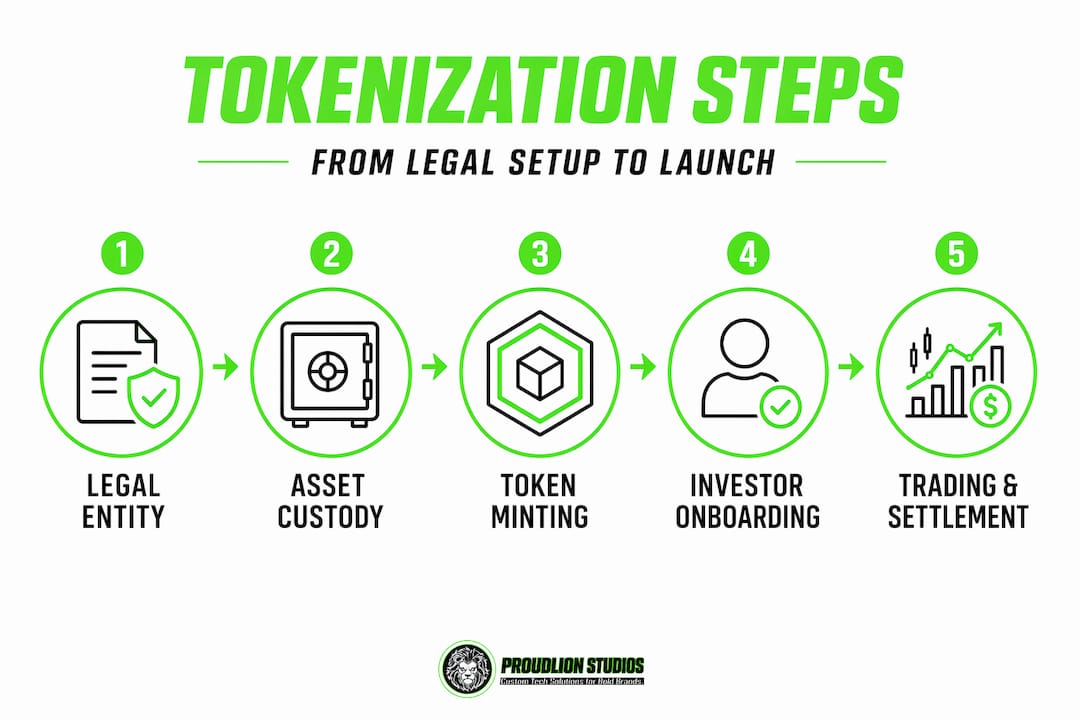
The foundation is legal, not technical. Before a single token is minted, you need a proper legal entity, typically a Special Purpose Vehicle (SPV), that holds the underlying asset and issues enforceable rights to investors. Subscription agreements, offering memorandums, and investor eligibility documents must all be in place. The blockchain layer sits on top of this legal structure, not in place of it.
Once the legal foundation is set, digital tokens are issued on a blockchain to represent fractional ownership or debt claims. These tokens do not carry ownership by themselves. They are delivery mechanisms that point back to the legal rights established off-chain. Smart contracts automate income distribution, compliance checks, corporate actions, and even margin calls, removing manual processing from workflows that traditionally required days of back-office coordination.
The token standard you choose matters significantly. ERC-3643 enforces compliance by design through on-chain identity verification, meaning transfers are automatically restricted to verified participants per regulatory requirements. This is not optional for security tokens. It is the architecture that makes regulated tokenization possible.
- Legal entity setup: SPV or equivalent structure holding the asset and issuing investor rights
- Token issuance: Digital tokens minted on a compliant blockchain, linked to legal claims
- Smart contract automation: Handles distributions, compliance gating, and corporate actions
- Investor onboarding: KYC/AML verification tied to wallet registration before any token transfer
- Transfer restrictions: On-chain identity checks prevent tokens from moving to unverified wallets
Pro Tip: Never mint tokens before your legal documentation is finalized. The order matters. Legal structure first, technology second. Reversing this sequence creates compliance exposure that is expensive to unwind.
Regulatory landscape shaping tokenization globally
The regulatory picture for digital asset tokenization has sharpened considerably, and understanding where the lines are drawn will determine whether your project succeeds or stalls.
In the United States, the SEC issued a no-action letter to DTC allowing a voluntary pilot tokenization program with specific safeguard restrictions. This approach lets market participants experiment without triggering binding rule changes, which is exactly the kind of regulatory flexibility startups need. It signals that the SEC is not blocking innovation. It is managing it.
The critical principle across all jurisdictions is this: tokenized assets are regulated as securities globally. The token is a delivery mechanism. The underlying asset determines the regulatory treatment. A tokenized real estate fund share is still a security. A tokenized bond is still a bond. Wrapping it in a smart contract does not change its regulatory classification.
"The token is a delivery mechanism; the underlying asset determines regulatory treatment." This framing, drawn from global securities regulators, should be the first thing any startup founder reads before engaging a tokenization platform.
In the European Union, the picture is more layered. MiCA regulation creates a unified framework for crypto-assets but does not govern all tokenized securities. The DLT Pilot Regime runs alongside MiCA as an experimental sandbox for securities settlement on distributed ledgers. Launching in the EU requires nuanced legal analysis because MiCA specifically targets certain crypto-asset categories and leaves tokenized securities under MiFID II instead.
Practical regulatory considerations for your project:
- US issuers: Reg D exemptions are the most common path for private placements of security tokens
- EU issuers: MiFID II governs security tokens; MiCA governs utility and payment tokens separately
- Offering documents: White papers and prospectuses are legally required in most jurisdictions before token sales
- Custodians: Partnering with regulated custodians is not optional for institutional-grade tokenization
- Transfer restrictions: Regulatory compliance must be encoded into the token's smart contract logic, not managed manually after the fact
Operational benefits that actually move the needle
The advantages of asset tokenization are not theoretical. They show up in settlement speed, capital efficiency, and the elimination of manual processes that currently cost businesses time and money.
Settlement is the most immediate gain. Traditional securities settle at T+2, meaning two business days after a trade executes. Tokenized assets enable T+0 settlement and smart contract automation of margin calls and collateral substitutions. For businesses managing collateralized transactions, that difference is significant. Capital tied up in settlement float gets freed faster, and counterparty risk drops with every hour you shorten the settlement window.

The liquidity management story gets even more interesting at the operational level. Tokenized money market funds and repo transactions are already improving intraday liquidity for institutional participants. For startups, this means that tokenizing assets like private equity fund shares or real estate holdings creates liquidity pathways that simply did not exist before without a full secondary market listing.
Here is how the operational benefits stack up in practice:
- Faster settlement: T+0 capability reduces counterparty exposure and frees working capital
- Automated distributions: Smart contracts execute income payments on schedule without manual processing
- 24/7 asset transfer: CUSIP continuity and preapproved blockchains enable round-the-clock asset movement between traditional and blockchain liquidity pools
- Fractional ownership: Lower investment minimums open assets to a broader investor base, improving fundraising reach
- Collateral automation: Margin calls and collateral substitutions execute automatically, reducing operational overhead
Real estate asset tokenization is a strong example of how fractional ownership changes deal economics. A $10 million commercial property that previously required a single large investor or a complex syndication can be divided into 10,000 tokens at $1,000 each. The asset becomes accessible to a wider pool of accredited investors, and the issuer gains liquidity options that a traditional private placement cannot offer.
Pro Tip: When modeling your tokenization project, calculate the value of settlement speed separately from the fundraising benefits. For businesses running collateralized positions, T+0 settlement alone can justify the infrastructure investment.
Key challenges you need to plan for
Tokenization does not simplify your back office. This is the most common misconception startups carry into their first tokenization project, and it leads to budget overruns and compliance gaps.
Onboarding, investor eligibility, custody, and audit requirements remain fully intact after tokenization. The blockchain automates certain workflows, but it does not replace the legal and compliance infrastructure your business still needs to operate. You still need qualified custodians, ongoing investor reporting, and regulatory filings.
The economics of tokenization require honest assessment. Minimum deal sizes typically exceed $500k to $1 million to justify legal and technical setup costs. Some platforms have executed smaller deals using simplified regulatory exemptions, but below that threshold the economics rarely work unless you are using a white-label platform that spreads infrastructure costs across multiple issuers.
| Challenge | What it means for your project |
|---|---|
| Legal structuring costs | SPV setup, offering documents, and legal review typically run $50k to $200k before any tech spend |
| Smart contract audits | Third-party audits are required for credibility and often mandated by regulated platforms |
| Investor onboarding | KYC/AML processes must be completed before wallet registration, adding time to fundraising timelines |
| Secondary market liquidity | Token issuance does not create a secondary market. You need a strategy for where tokens trade after issuance |
| Regulatory reporting | Ongoing compliance obligations do not disappear after token launch |
Technology choices also carry long-term consequences. The blockchain network you select, whether a public chain like Ethereum or a permissioned network like Hyperledger Besu, affects interoperability, cost, and regulatory perception. Wallet registration systems must integrate with your KYC provider. Smart contracts need to be audited before deployment. These are not one-time decisions. They shape your operational architecture for years.
Practical steps to launch your tokenization project
Getting from concept to compliant token issuance requires a structured sequence. Skipping steps early creates problems that are far more expensive to fix later.
-
Assess your asset and ownership structure. Not every asset is a good tokenization candidate. Illiquid assets with clear cash flows, like real estate, private credit, or fund shares, are the strongest starting points. Assets with complex ownership disputes or unclear title are poor candidates regardless of their value.
-
Establish your legal entities and documentation. Set up the SPV or equivalent legal structure before engaging any blockchain developer. Draft your subscription agreements, investor eligibility criteria, and offering documents. This step takes longer than most founders expect, typically two to four months.
-
Choose your blockchain infrastructure and token standard. Select a network that aligns with your regulatory environment and investor base. For security tokens, compliant token standards for startups like ERC-3643 are the practical choice because compliance logic is built into the token itself.
-
Build your investor onboarding and wallet registry. KYC/AML verification must be completed before any investor receives tokens. Your wallet registry needs to integrate with your compliance provider so that transfer restrictions are enforced automatically.
-
Plan your secondary market strategy before launch. Token issuance without a secondary market pathway creates investor frustration. Identify regulated trading venues or alternative liquidity mechanisms before you close your first investor.
-
Integrate with traditional finance and regulatory reporting systems. Your tokenized assets need to connect with existing accounting, reporting, and custody systems. Blockchain strategies for startups in 2026 increasingly emphasize this integration layer as the difference between a pilot project and a scalable business.
Pro Tip: Run a pilot with a single asset class and a small investor group before scaling. The operational lessons from a $500k pilot will save you from costly mistakes on a $10 million raise.
My honest take on where tokenization is heading
I have watched a lot of startups approach tokenization with the assumption that the hard part is the blockchain. It is not. The hard part is the operational integration.
In my experience, the projects that succeed are not the ones with the most sophisticated token architecture. They are the ones where the team spent as much time on legal structuring and back-office workflows as they did on smart contract development. Tokenization's near-term value lies in workflow automation, not just token issuance. A token that automates margin calls and collateral substitutions is worth more to a business than a token that simply represents ownership.
I am also cautious about the narrative that regulated market infrastructure like DTCC eliminates the need for startups to build their own compliance competency. Partnering with established infrastructure is smart. Outsourcing your understanding of compliance is not. Regulatory requirements will evolve, and the businesses that thrive will be the ones that understand the rules well enough to adapt.
My advice to any startup founder considering tokenization right now: engage a regulated legal advisor before you engage a blockchain developer. Then run a pilot. The technology is ready. The question is whether your legal and operational infrastructure is ready to support it.
— Amal
Build your tokenization project with Proudlionstudios
If you are ready to move from concept to compliant token issuance, Proudlionstudios builds the infrastructure that makes it possible. The Dubai-based team specializes in end-to-end blockchain development for tokenization projects, from smart contract architecture and ERC-3643 compliant token design to multi-blockchain interoperability and custody integration.
Proudlionstudios works with startups and enterprises across multiple countries, building tokenization and RWA solutions that are tailored to regulatory requirements, not templated from generic packages. Whether you are tokenizing real estate, private equity fund shares, or structured credit products, the team brings the technical depth and regulatory awareness your project needs. Explore the portfolio or request a consultation to discuss your specific asset tokenization requirements.
FAQ
What is asset tokenization?
Asset tokenization is the process of representing ownership rights to a real-world asset as a digital token on a blockchain. The token is a delivery mechanism backed by a legal structure, not a standalone ownership instrument.
How does asset tokenization work for fundraising?
Issuers create a legal entity holding the underlying asset, issue tokens representing fractional claims to investors, and use smart contracts to automate distributions and compliance. This allows businesses to raise capital from a broader investor base with lower minimums than traditional private placements.
What are the main benefits of tokenized assets?
The primary benefits include faster settlement (T+0 versus T+2), smart contract automation of distributions and corporate actions, 24/7 asset transfer capability, and fractional ownership that expands investor access.
Are tokenized assets regulated as securities?
Yes. Tokenized assets are regulated as securities in most jurisdictions. The regulatory treatment is determined by the underlying asset, not the token format. US issuers typically use Reg D exemptions; EU issuers fall under MiFID II.
What does asset tokenization cost to implement?
Legal and technical setup costs typically require a minimum deal size of $500k to $1 million to be economically viable. Smaller deals are possible using simplified regulatory exemptions and white-label platforms that share infrastructure costs across multiple issuers.