
Every NFT marketplace worth building in 2026 needs this core feature set to compete:
- Storefront and UI/UX — clean, browsable interface with collection pages, trending sections, and fast navigation
- User profiles — customizable pages showing owned NFTs, sale history, social links, and follower counts
- Wallet integration — support for MetaMask, WalletConnect, Coinbase Wallet, and Rainbow with ENS name display
- Multi-chain support — compatibility across Ethereum, Polygon, Solana, BNB Chain, and emerging networks
- Listing status — real-time visibility into active listings, sold items, and pending offers
- Bidding and auctions — English auctions with reserve prices, timed endings, and fixed-price options
- Royalty management — on-chain royalty enforcement using the ERC-2981 standard
- Smart contract automation — minting, ownership transfers, royalty payouts, and auction settlement handled on-chain
- Advanced search and filtering — filter by price, rarity, category, blockchain, and popularity
- Payment gateways — crypto payments plus fiat on-ramps via services like MoonPay or Crossmint
- Analytics and reporting — real-time dashboards for transaction history, collection stats, and creator earnings
- Security features — anti-fraud protocols, wallet authentication, and verified ownership records
- Reviews and ratings — community trust signals for creators and collections
- AI-powered recommendations — personalized asset discovery, pricing suggestions, and fraud detection
- Lazy minting — gas-fee deferral until first sale to lower barriers for creators
What is an NFT marketplace?
An NFT marketplace is a digital platform where users create, buy, sell, and trade non-fungible tokens. Think of it like eBay, but every item is a blockchain-verified digital asset with a provable ownership record. That verification is what separates an NFT marketplace from a standard online store.
The blockchain does the heavy lifting. Each token is unique, its ownership history is publicly recorded, and no central authority can alter that record. Smart contracts govern the rules: who owns the asset, what royalties the creator earns on resale, and how ownership transfers when a sale completes.
NFT marketplaces serve a wide range of asset types, including digital art, gaming items, music, virtual real estate, and domain names. The platform's feature set determines how well it serves creators, collectors, and traders across all those categories.
How does an NFT marketplace actually work?
The process starts with minting. A creator uploads a digital file, adds metadata (title, description, traits), and the platform's smart contract converts it into a unique token on the blockchain. The most common token standards are ERC-721 for one-of-a-kind assets and ERC-1155 for editions or gaming items that allow batch creation.
Buyers connect a digital wallet like MetaMask or Phantom to authorize transactions. When a purchase completes, the blockchain records the transfer permanently. The token moves from the seller's wallet to the buyer's, and if the smart contract includes a royalty clause, the original creator receives their percentage automatically on every future resale.
Auctions work the same way, just with a bidding layer on top. Bids are held in escrow by the smart contract, not by the platform, so neither party needs to trust a middleman. When the auction closes, settlement executes on-chain. This architecture is why smart contract automation is the backbone of every reliable marketplace.
The full NFT marketplace features list explained
1. Storefront design and UI/UX
The storefront is the first thing users see, and it shapes whether they stay or leave. A well-built storefront surfaces trending collections, featured drops, and category navigation without overwhelming the visitor. Collection pages need floor price, volume, item count, and owner stats visible at a glance.
Good Web3 UX design reduces the number of steps between landing on the platform and completing a transaction. OpenSea's OS2 redesign, for example, rebuilt the entire navigation experience around faster discovery, adding an explore tab, a traits tab, and real-time notifications for completed transactions.
2. User profiles
Profiles are the social layer of any marketplace. A strong profile page shows a user's owned NFTs, listed items, sale history, offer history, and follower count. ENS name integration and bio fields let creators build identity on the platform rather than just a wallet address.
For creators specifically, the profile doubles as a portfolio. Collectors use it to verify a seller's track record before placing a bid.
3. Listing status
Buyers and sellers both need real-time visibility into where an asset stands. Listing status covers active listings, sold items, expired listings, pending offers, and counter-offers. Without clear status indicators, users lose confidence in the platform's reliability.
This feature also feeds into analytics. Tracking listing activity over time helps creators understand demand patterns and price their work more accurately.
4. Wallet integration and support
Secure wallet integration is the entry point for every user interaction on a marketplace. Supporting MetaMask, WalletConnect v2, Coinbase Wallet, and Rainbow covers the vast majority of active Web3 users. Displaying ENS names and avatars instead of raw wallet addresses makes the experience feel human.
Pro Tip: Handle wallet disconnection gracefully. A user who gets logged out mid-transaction without a clear recovery path will not return.
Wallet-based authentication without mandatory email registration lowers onboarding friction significantly, and it has become a standard expectation in 2026.
5. Multi-chain and cross-chain support
Supporting a single blockchain limits your audience to that chain's users. Modern platforms support Ethereum, Polygon, BNB Chain, Solana, and newer networks. The more capable platforms now offer cross-chain purchasing, letting buyers use ETH in their wallet to purchase NFTs on any supported chain without manually bridging assets. All the complexity happens behind the scenes.
OpenSea's OS2 platform currently supports 19 blockchains, including Flow, ApeChain, Berachain, and Soneium, with more being added. For builders, multi-chain architecture is worth understanding deeply before committing to a tech stack. A solid multi-chain development guide can save significant rework later.
6. Bidding options and auction mechanics
Auction functionality creates competitive price discovery and drives engagement. The standard implementation is an English auction: ascending bids, reserve price, timed ending, and automatic settlement when the clock runs out. Bid escrow is handled by the smart contract, not custodially by the platform.
Beyond standard auctions, mature platforms also support:
- Fixed-price listings in ETH and ERC-20 tokens like USDC and WETH
- "Make Offer" flows where buyers submit below-ask bids and sellers accept or counter
- Collection offers, where a buyer bids on any item within a collection
- Trait-based offers targeting NFTs with specific attributes
Dutch auctions, where price descends over time, work well for launchpad drops and fair-price discovery on new collections.
7. Royalty management
Royalties are what make NFT marketplaces genuinely different from traditional art sales. Creators embed a royalty percentage directly into the smart contract using the ERC-2981 standard, so every secondary sale automatically sends a cut back to the original creator. Typical royalty rates run from 2.5% to 10%.
The key distinction is enforcement at the contract level versus marketplace policy. Policy-based royalties can be bypassed. Contract-level enforcement cannot. For creators who want full control, deploying a creator-owned contract through a tool like Manifold gives immutable royalty settings that no platform decision can override.
8. Smart contract functionality and customization
Smart contracts automate every critical marketplace function: minting, ownership transfers, royalty payouts, and auction settlement. They eliminate intermediaries and make every transaction transparent and verifiable on-chain.
Most platforms use shared contracts, where all creators mint under the same contract address. Creator-owned contracts, by contrast, deploy a separate contract per creator, giving them full control over royalties, supply caps, and token behavior. Creator-owned smart contracts are preferred by technically sophisticated users who need immutable royalty structures and complete artistic control.
For builders, supporting both options gives the platform flexibility to serve beginners and power users alike.
9. Advanced search and filtering
As collections grow into the millions, advanced search and filtering become the primary way users find anything. Filters by price range, category, rarity rank, blockchain, and popularity are the baseline. Trait-based filtering, where users can search for NFTs with specific attributes like "background: blue" or "eyes: laser," is critical for gaming and collectible projects.
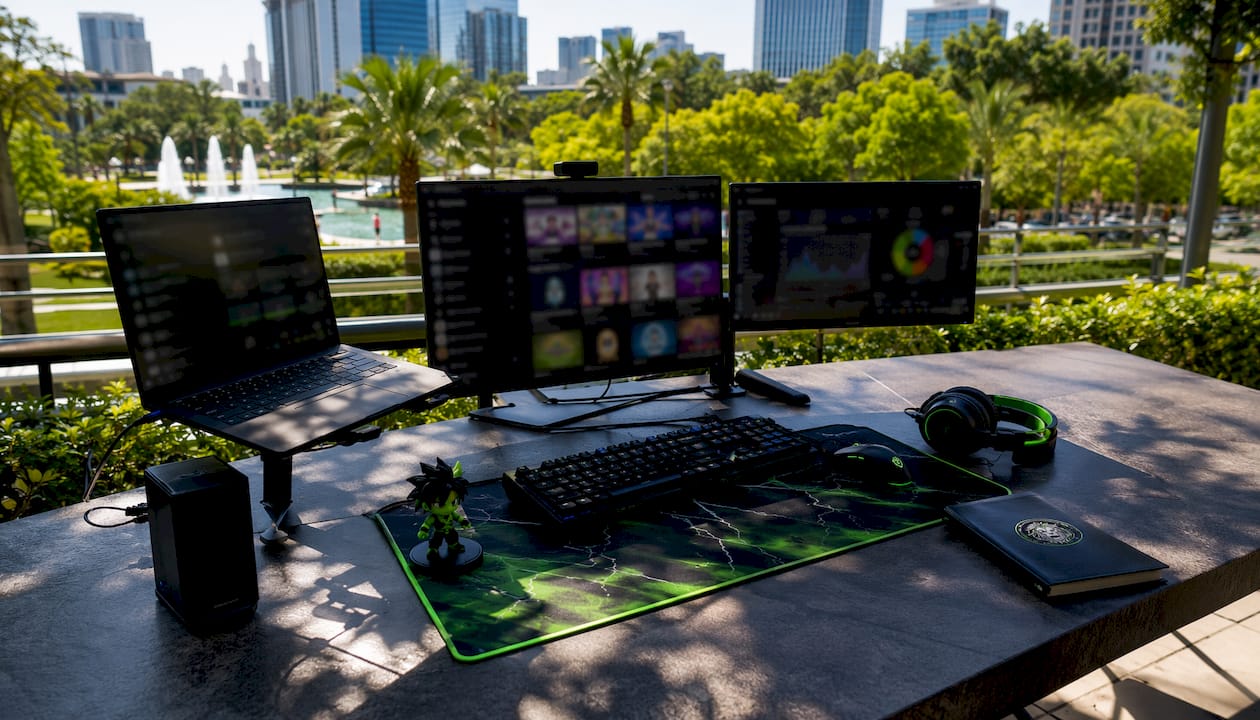
Full-text search across collections and items, combined with trending sections sorted by volume and sales count, keeps users engaged and discovering new assets. Rarity ranking for trait-based collections adds another layer of value for serious collectors.
10. Analytics and reporting tools
Real-time analytics dashboards give creators and collectors the data they need to make informed decisions. For creators, that means total sales volume, royalties earned, offer history, and payout records. For collectors, it means floor price trends, volume charts, and ownership concentration data.
Color-coded rarity indicators, live transaction feeds powered by indexed on-chain events, and portfolio tracking from the wallet sidebar all contribute to a transparent trading environment. Platforms that surface this data clearly build more trust than those that hide it.
11. Security features and anti-fraud measures
Security covers several distinct layers. Authentication through wallet signatures prevents unauthorized account access without requiring passwords. Anti-fraud measures flag suspicious activity like wash trading, where the same wallet buys and sells to itself to inflate price history.
Verified creator badges and collection verification reduce impersonation. Metadata storage on IPFS rather than centralized servers protects against assets disappearing if a company shuts down. These protections matter because a single high-profile exploit can permanently damage a platform's reputation.
12. Payment gateway options and cryptocurrency support
Crypto payments in ETH and ERC-20 tokens like USDC and WETH are the foundation. Fiat on-ramps via MoonPay, Stripe's crypto product, or Crossmint extend the platform's reach to users who do not yet hold cryptocurrency. This is especially important for gaming and sports NFT audiences, where many buyers are new to Web3.
Supporting token swaps through integrated liquidity aggregators, as OpenSea's OS2 does, lets users access both NFTs and fungible tokens in one place without leaving the platform.
13. Reviews and ratings system
Community trust signals matter more as the market matures. A ratings system for creators and collections lets buyers assess reputation before committing funds. Review systems work best when tied to verified purchase history, so only actual buyers can leave feedback.
For new creators, a track record of positive ratings accelerates trust-building faster than any marketing effort.
What emerging features are reshaping NFT platforms in 2026?
Beyond the core feature set, several capabilities are becoming competitive differentiators.
AI-powered recommendations and fraud detection are now expected on forward-looking platforms. AI integration analyzes user behavior to surface relevant collections, suggests pricing based on comparable sales, and flags anomalous trading patterns that indicate wash trading or phishing attempts. For builders thinking about how AI fits into broader eCommerce and Web3 contexts, the applications of AI in eCommerce extend directly into NFT marketplace personalization and conversion.
Lazy minting defers gas costs until the moment of first sale rather than charging creators upfront. This removes the financial barrier for new creators who want to list work without paying network fees before knowing if it will sell. It has become a widely adopted standard and is now a baseline expectation for creator-friendly platforms.
Low-friction onboarding through wallet-based login, without forced email registration or KYC for basic browsing, is a genuine competitive edge. Platforms that require account creation before letting users explore collections lose a measurable portion of casual visitors before they ever see an NFT.
Launchpad and drops functionality supports scheduled mint events with allowlist mechanics, Merkle tree proofs for allowlist verification, and fair-launch pricing through bonding curves or Dutch auctions. This feature set serves project teams launching new collections and drives significant volume spikes.
Rewards and loyalty programs are gaining traction. OpenSea's OS2 introduced an XP system that rewards users for creating listings and placing collection offers, with XP updating in real time throughout the day. Tying platform activity to token-based rewards creates retention loops that pure trading mechanics alone cannot.
The broader blockchain development trends shaping these features point toward tighter integration between NFT marketplaces and DeFi tools, with platforms increasingly handling tokens, staking, and governance alongside traditional NFT trading.
How to choose or build an NFT marketplace with the right features
The right feature set depends entirely on who you are building for. A creator-focused platform prioritizes minting tools, royalty enforcement, and profile customization. A collector-focused platform invests heavily in search, filtering, rarity data, and analytics. A pro-trader platform needs bulk listing tools, real-time floor price feeds, and collection offer mechanics.
No platform needs every feature at launch. The practical approach is to ship core functionality first: minting, fixed-price listings, wallet integration, and basic search. Then layer in auctions, analytics, and multi-chain support within the first few months. Advanced features like AI recommendations, launchpad mechanics, and cross-chain purchasing come later, once the core experience is stable.
The biggest mistake builders make is treating all features as equal priority. Security, smart contract integrity, and wallet compatibility are non-negotiable from day one. Everything else can be phased.
Proud Lion Studios builds custom NFT marketplaces and blockchain-powered platforms for startups and enterprises, with deep expertise in smart contract architecture, multi-chain integration, and Web3 UX. If you are planning a marketplace and want a technical partner who builds to production standards rather than templates, the team at Proud Lion Studios is ready to scope your project.
Explore Proud Lion Studios' NFT and tokenization services or get in touch directly to discuss your platform requirements.
Key Takeaways
A production-ready NFT marketplace requires secure smart contracts, multi-chain wallet integration, and real-time analytics from launch, with AI and cross-chain features adding competitive separation in 2026.
| Point | Details |
|---|---|
| Smart contracts are foundational | Automate minting, royalties, transfers, and auctions without intermediaries from day one. |
| Multi-chain support expands reach | Platforms like OpenSea's OS2 support multiple blockchains, enabling cross-chain purchasing without manual bridging. |
| Lazy minting removes creator barriers | Deferring gas fees until first sale lowers upfront costs and increases creator participation. |
| AI and analytics build trust | Real-time dashboards and AI-powered fraud detection are expected features on competitive 2026 platforms. |
| Feature priority depends on audience | Creator-focused, collector-focused, and pro-trader platforms each require a different core feature emphasis. |