
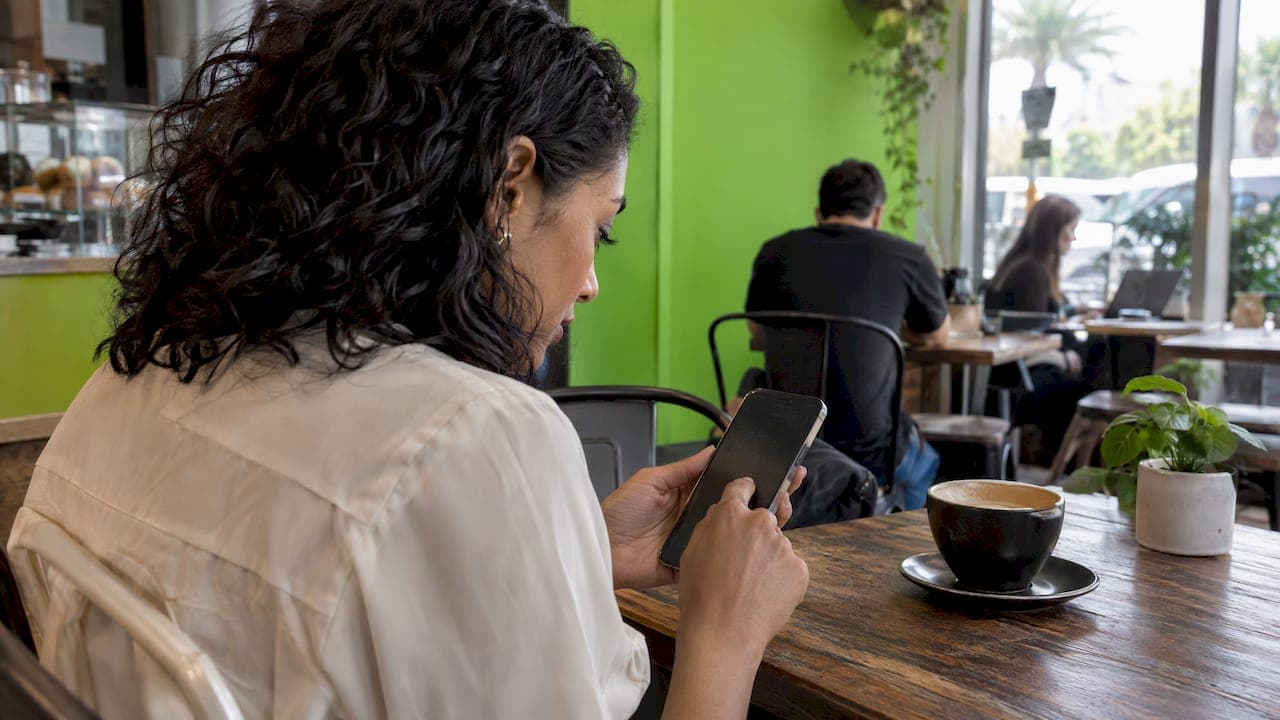
A zero-click search is a search that ends on the results page: the person gets the answer from a snippet, a map, a knowledge panel or an AI summary and never opens a website. For UAE and GCC companies, this means a growing share of your potential buyers now meet your brand, or a competitor's, before any visit happens. The good news is that visibility inside the answer can be earned, and the visits that still arrive tend to be more serious.
This guide explains what zero-click search is, what the data says about its effect on traffic, and what a founder or marketing lead in Dubai, Abu Dhabi or Riyadh can do about it.
TL;DR
- A zero-click search is answered on the results page itself, through snippets, maps, knowledge panels or AI summaries, so no website visit follows.
- Industry research puts the traffic loss at roughly 15% to 25% for organic web visits, and informational pages feel it most.
- Google says its AI features run on the same core ranking systems as classic search, so sound SEO remains the foundation.
- Stop judging SEO by clicks alone. Track impressions, brand mentions, branded search and the quality of the leads that do arrive.
- For B2B buyers choosing a development partner, the answer to "who can build this?" is often decided before the click.
Table of Contents
- What a zero-click search is
- How common zero-click searches are
- What it means for UAE and GCC businesses
- The case for staying calm: clicks that remain are better
- Is SEO still worth it?
- How to stay visible when nobody clicks
- What to measure instead of clicks alone
- A simple plan for the next 90 days
- Our perspective
- Make your website ready for answer engines
- FAQ
- Sources
What a zero-click search is
In a classic search, the user types a query, scans ten blue links and clicks one. In a zero-click search, the results page gives the answer directly. The user reads it, and the session ends or moves to another query.
The most common forms are:
- Featured snippets: a short extract from a page shown above the organic results.
- AI Overviews and AI answers: a generated summary that combines information from several sources.
- Knowledge panels: a fact box about a company, person or place.
- Local packs and maps: business names, ratings, opening hours and phone numbers shown without a visit to any site.
- Instant answers: currency conversions, definitions, weather, time zones, calculators.
- People Also Ask boxes: expandable questions with short answers.
- Sitelinks and shopping or product carousels: extra entry points that keep the user on the results page.
Search engines are built this way on purpose. According to Semrush's analysis of the zero-click market, engines have an incentive to keep users inside their own ecosystem, so they increasingly behave as answer engines. AI features accelerate the shift because they synthesize several sources into one response on the page.
How common zero-click searches are
The numbers differ by study, method and year, so treat them as direction rather than precision.
| Finding | Figure | Source |
|---|---|---|
| Searches ending without a click in 2024 | About 58.5% in the US and 59.7% in the EU | Semrush |
| Consumers relying on zero-click results at least 40% of the time | About 80% | Bain & Company, December 2024 survey |
| Estimated drop in organic web traffic from zero-click results | 15% to 25% | Bain & Company |
| Click-through reduction when an AI summary appears | 34.5%, mainly on informational content | Ahrefs, 2025 |
Two cautions. First, these are mostly US and EU figures. We have not seen a trustworthy zero-click rate measured specifically for the UAE, so do not quote one as if it were local. Second, "no click" does not mean "no value". A user who reads your company name in a summary and later searches for you directly is a lead the click report never shows.
What it means for UAE and GCC businesses
The local picture adds a few wrinkles that change how you should react.
Mobile dominates. One aggregator reports that in 2024 smartphones accounted for 77.6% of UAE web traffic, and that over 90% of map and navigation searches came from mobile (SEO Sandwitch). On a small screen, an answer box takes most of the first view, so the position of your link matters even less than it did on desktop.

Two languages, uneven optimization. A 2025 UAE keyword guide cites Google's MENA Digital Report 2023, saying Arabic content consumption in the UAE grew 120% year over year while 70% of businesses still optimized mainly for English (Saimindware). If that holds, Arabic answers are an open lane for brands willing to write them well.
Local intent is the most exposed and the most rewarding. One UAE SEO agency claims the Google Map Pack drives 60% to 80% of high-intent commercial traffic for service businesses (BrandNurturer). Treat that as a vendor estimate, but the principle is sound: for local service queries, the map result is the answer, and a complete, well-reviewed business profile is your landing page.
B2B buying journeys start with questions. A founder asking "how much does an NFT marketplace cost" or "how long does a mobile app take to build" will often read a summary and shortlist two or three names from it. If your company is cited in that summary, you are on the list. If not, you never learn the search happened.
The case for staying calm: clicks that remain are better
Zero-click is not a story of pure loss. Google's own position, set out by Liz Reid, is that AI search features can produce higher-quality clicks for complex or purchase-intent topics, because the user arrives with a foundational overview already in hand. That is a company claim, so measure it on your own site rather than assuming it, but the pattern matches what B2B teams usually see: fewer casual visits, more informed ones.
The practical consequence: pages that only answer a simple definition lose traffic, while pages that offer a decision aid, a worked estimate, a framework or a tool give the user a reason to continue past the summary.
Is SEO still worth it?
Yes. Bain's conclusion is that SEO remains an important and effective way to reach consumers, and that brands should refine it and use technical optimization to make content readable for large language models. Google's guidance points the same way: generative AI features run on the same core ranking systems as traditional organic search, so established practice is still the entry ticket to AI eligibility.
What changes is the goal. Ranking is the means; being the source the answer is built from is the end.
How to stay visible when nobody clicks
Write the answer first, then the depth
Open each page and each section with a direct answer in two or three sentences, then support it. That structure is what snippets and AI summaries lift. It also serves a human who skims. Industry guidance recommends in-depth content with first-hand experience, skimmable headings, specific advice and a call to action, a mix that gives the engine a clean extract and gives the reader a reason to keep going.
Be specific where a summary cannot be
A summary can define "smart contract audit". It cannot give your scope, your process, your timeline logic or the trade-offs you have seen across real projects. Put the specifics a buyer needs on the page: price ranges you can stand behind, deliverables, what is included and what is not. Generic text is what AI replaces first.
Use structured data, but know its limits
Google has said structured data remains useful in the AI search era, and it helps search engines understand what a page is about. Do not expect a special trick, though: there is no dedicated schema that guarantees a place in AI Overviews, and Google does not use files such as llms.txt to surface content. Mark up what is true (organization, articles, FAQs, products, reviews), keep it consistent with the visible page, and move on to the work that matters more.

Decide what you want Google to show
In April 2025 Google said site owners can limit how their content appears in AI Overviews with nosnippet-style settings (Search Engine Journal). For most B2B brands, being quoted is the goal, so opting out is rarely right. It is worth knowing the option exists for gated or premium material.
Build the entity, not just the page
Search and AI systems recognize companies as entities: a name connected to services, people, places and reviews. Keep your name, address, phone and service descriptions identical on your website, Google Business Profile, LinkedIn and industry directories. Earn mentions in credible places. A consistent entity is easier to cite than an anonymous page.
Serve both languages
If your buyers search in Arabic as well as English, publish proper Arabic pages written by native editors, not machine translation. In a market where most competitors still optimize for English, this is one of the few clear openings.
Make copy that earns the click that remains
When a click does come, the headline, meta description and landing page copy decide whether it turns into a lead. Tools such as Coppica's copy optimization platform analyze ad, email and landing page performance and show which persuasive elements drive conversions, which helps once AI summaries have cut the volume of clicks and each one matters more.
What to measure instead of clicks alone
If your dashboard shows only sessions, it will look worse every quarter even when your brand is more visible. Move to a visibility-first view, as Search Engine Land's measurement guide recommends:
- Impressions in Google Search Console. Note that cited AI links are counted, but Search Console does not separate them from standard web impressions.
- Share of SERP presence: how many of the results and features on your priority queries are yours (snippet, local pack, panel, organic).
- Entity coverage and AI brand mentions: does the AI answer name your company when asked who builds NFT marketplaces or AI agents in Dubai? Test a fixed list of prompts monthly and record the result.
- Branded search growth: more people typing your name is the clearest sign that unclicked visibility is working.
- Lead quality: conversion rate from organic visits to discovery calls, and the share of calls that become proposals.
Bain frames the same shift: generative AI turns the customer journey into an algorithm-driven narrative, so brands should measure search impressions and AI reach alongside clicks.
A simple plan for the next 90 days
- Weeks 1 to 2: list the 20 questions your buyers ask before they hire a development partner (cost, timeline, regulation, how to choose). Check which ones already trigger a snippet or AI summary and who is cited.
- Weeks 3 to 6: rewrite your top pages answer-first, add real specifics, fix schema and update your Google Business Profile.
- Weeks 7 to 10: publish Arabic versions of the pages that matter most and add original material only you can supply: process descriptions, scope checklists, regulation explainers.
- Weeks 11 to 12: re-run your prompt tests, compare impressions, branded search and lead quality against the baseline.
For deeper tactics, see our guides on how to appear in Google AI Overviews, AI search optimization and getting cited, GEO versus SEO and our SEO checklist for UAE businesses. Early-stage teams will find the SEO playbook for UAE startups more practical.
Our perspective
We build digital products for a living, and we see zero-click search from both sides: as a studio that wants to be found, and as the team that builds the sites and platforms our clients depend on.
Our view is that zero-click rewards businesses that are genuinely specific. A fully UAE-based team, tailored scope instead of templated packages and end-to-end delivery are things a summary cannot flatten, as long as they are written down clearly and kept consistent everywhere the brand appears. That is how we approach our own visibility.
The second point is technical. A site that loads fast on mobile, has clean structure, correct markup and clear content hierarchy gives search engines and AI systems something they can read and trust. Visibility is partly an engineering problem, and engineering is where we are strongest. Build the foundation properly and the answer boxes become a channel, not a threat.
We would rather our future clients meet us as a cited, trusted name in an answer and arrive ready to talk scope than click through ten generic pages first.
Amal
Make your website ready for answer engines
Visibility inside answers starts with how your site is built: structure, speed, mobile experience, schema and content architecture. We design and develop professional business websites from $8,000 (one-off), and custom web applications with backend, database and admin panel from $25,000 (one-off). Both are scoped to your goals, not pulled from a template.
If the question is how to get found and cited, our team also runs an AI SEO and GEO service in Dubai. If you want to automate lead handling once those visits arrive, look at our AI agents development. You can reach us on WhatsApp at +971 54 757 8282.
FAQ
What is a zero-click search?
It is a search where the user gets the answer on the results page and does not click any link, organic or paid. The answer can be a snippet, a map listing, a knowledge panel, an instant answer or an AI summary.
Are zero-click searches killing organic traffic?
They reduce it, mainly for simple informational queries. Bain estimates a 15% to 25% drop in organic web traffic from zero-click results, and Ahrefs found AI summaries alone can cut click-through rates by 34.5% on informational content. Pages built around decisions, tools and original detail hold up better, and the remaining visitors are often more qualified.
How do I get my company cited in an AI answer?
Answer the question directly at the top of a page, add specifics only your company can supply, keep your company details consistent across the web, and make sure the site is fast and crawlable. Google says AI features use its core ranking systems, so good SEO is the base. There is no special markup that guarantees inclusion.
Which metrics replace clicks?
Track impressions, presence across result features, brand mentions in AI answers, branded search volume and the quality of leads from organic traffic. Review them together each month rather than looking at sessions alone.
Should a UAE company still invest in SEO?
Yes. SEO is the foundation of both classic and AI-assisted visibility. Focus on specific, answer-first content in English and Arabic, a complete local profile and a technically sound site, then judge results by leads, not raw visits. To discuss your own plan, book a free discovery call at proudlionstudios.com/contact.
Sources
- How to Win in a Zero-Click Search Market, Semrush
- Goodbye Clicks, Hello AI: Zero-Click Search Redefines Marketing, Bain & Company
- Welcome to Zero-Click Search, Ahrefs
- AI in Search: Driving more queries and higher quality clicks, Google
- Measuring zero-click search: Visibility-first SEO, Search Engine Land
- Google Confirms: Structured Data Still Essential in AI Search Era, Search Engine Journal
- Google Search Central on Optimizing for Generative AI, SEO Advantage
- Inside Zero-Click Searches, SEO.com
- UAE Keyword Research Guide, Saimindware
- United Arab Emirates SEO Statistics & Trends, SEO Sandwitch
- SEO Services in UAE, BrandNurturer
Ready to turn visibility into projects? Book a free discovery call or message us on WhatsApp at +971 54 757 8282.