

Many tech leaders believe cross-platform mobile frameworks have reached maturity and stability. That assumption is crumbling in 2026. Kotlin Multiplatform is challenging Flutter's dominance by solving real enterprise pain points, while blockchain integration and AI automation are redefining what mobile apps can achieve. React Native remains a strong contender, but the landscape is shifting fast. This article clarifies the current state of mobile app development frameworks, reveals why major companies are reconsidering their technology stacks, and outlines strategic options for tech leaders planning their 2026 roadmap.
Table of Contents
- The evolution of cross-platform mobile frameworks in 2026
- Why Kotlin Multiplatform surpasses Flutter for enterprise-grade mobile apps
- Integrating blockchain and AI automation in mobile app strategies for 2026
- Comparing development speed and productivity: Flutter vs Kotlin Multiplatform in 2026
- Discover expert mobile app, blockchain, and AI development services
- FAQ about the future of mobile apps in 2026
Key takeaways
| Point | Details |
|---|---|
| KMP addresses Flutter limits | Kotlin Multiplatform resolves enterprise hardware integration and performance issues that Flutter cannot overcome. |
| Flutter leads market share | Flutter maintains 46% cross-platform market share but faces growing technical challenges in 2026. |
| KMP adoption accelerates | Kotlin Multiplatform adoption jumped from 7% to 23% among JVM developers in eighteen months. |
| React Native stays competitive | React Native holds 35-42% market share thanks to JavaScript ecosystem maturity and developer familiarity. |
| Blockchain and AI drive strategy | MetaMask's growth to 30 million users and AI automation capabilities are reshaping mobile app strategic planning. |
The evolution of cross-platform mobile frameworks in 2026
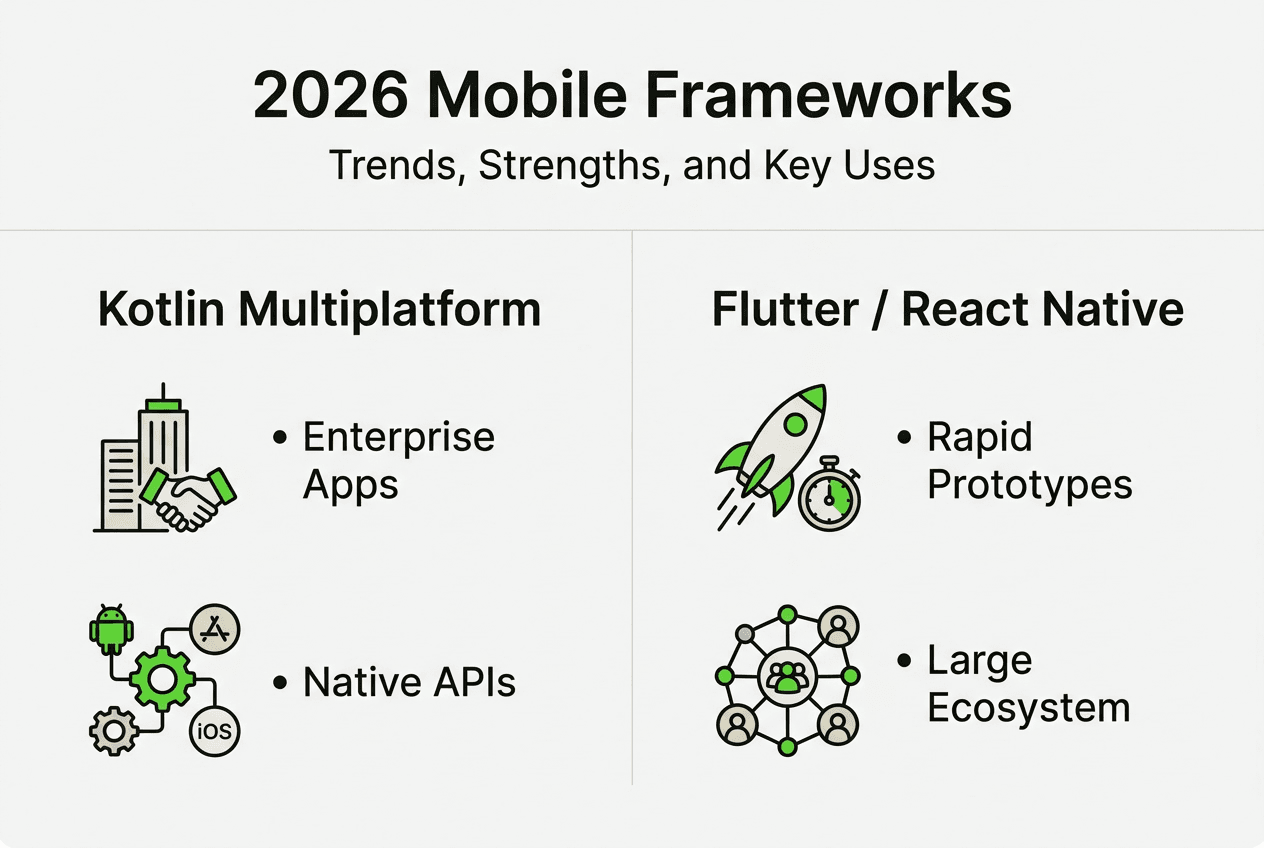
The cross-platform mobile development landscape is experiencing a fundamental realignment. Kotlin Multiplatform adoption has grown from 7% to 23% in just eighteen months among JVM developers who need native performance without sacrificing code reuse. This explosive growth signals a shift in how enterprise teams approach mobile architecture.
Flutter continues to lead with 46% market share in cross-platform development, but cracks are showing. Companies that initially chose Flutter for rapid prototyping are now hitting limitations when scaling to production systems that demand tight hardware integration. The framework excels at UI consistency and fast iteration, yet struggles with Bluetooth latency, complex native API access, and certain device-specific edge cases.
React Native maintains a strong 35-42% presence in the market. Its maturity and the vast JavaScript ecosystem provide a safety net for teams already invested in web technologies. The bridge architecture allows JavaScript code to communicate with native components, offering flexibility that many organizations still value despite performance trade-offs.
Each framework takes a distinct architectural approach. KMP shares business logic across platforms while allowing developers to write native UI code for iOS and Android separately. This hybrid strategy maximizes performance where it matters most. Flutter owns the entire rendering stack, painting every pixel through its Skia engine to guarantee visual consistency. React Native bridges JavaScript with native components, relying on platform-specific rendering but introducing an abstraction layer that can bottleneck performance.
| Framework | Market Share | Architecture | Best For | | --- | --- | | Kotlin Multiplatform | 23% | Shared logic, native UI | Enterprise apps needing hardware integration | | Flutter | 46% | Custom rendering engine | Rapid prototyping and consistent UI | | React Native | 35-42% | JavaScript bridge | Teams with web dev expertise |
Understanding these differences is critical for strategic planning. Your choice impacts not just initial development speed but long-term maintenance costs, team scalability, and the ability to integrate emerging technologies like blockchain and AI.
Pro Tip: Assess your team's existing JVM expertise and the degree of native hardware integration your app requires before committing to a framework. If you need Bluetooth, NFC, or advanced camera features, KMP's native approach often saves months of debugging compared to abstraction layers.
Why Kotlin Multiplatform surpasses Flutter for enterprise-grade mobile apps
Flutter's promise of write once, run anywhere sounds ideal until you encounter the physics wall. In 2026, enterprise-grade applications face limitations when Flutter's abstraction layer cannot deliver the native performance or hardware access required for production systems. Real-world issues include Bluetooth latency spikes during data transfer, iOS navigation stack bugs that break user flows, and serialization errors on specific Android devices that Flutter's unified approach cannot address without workarounds.
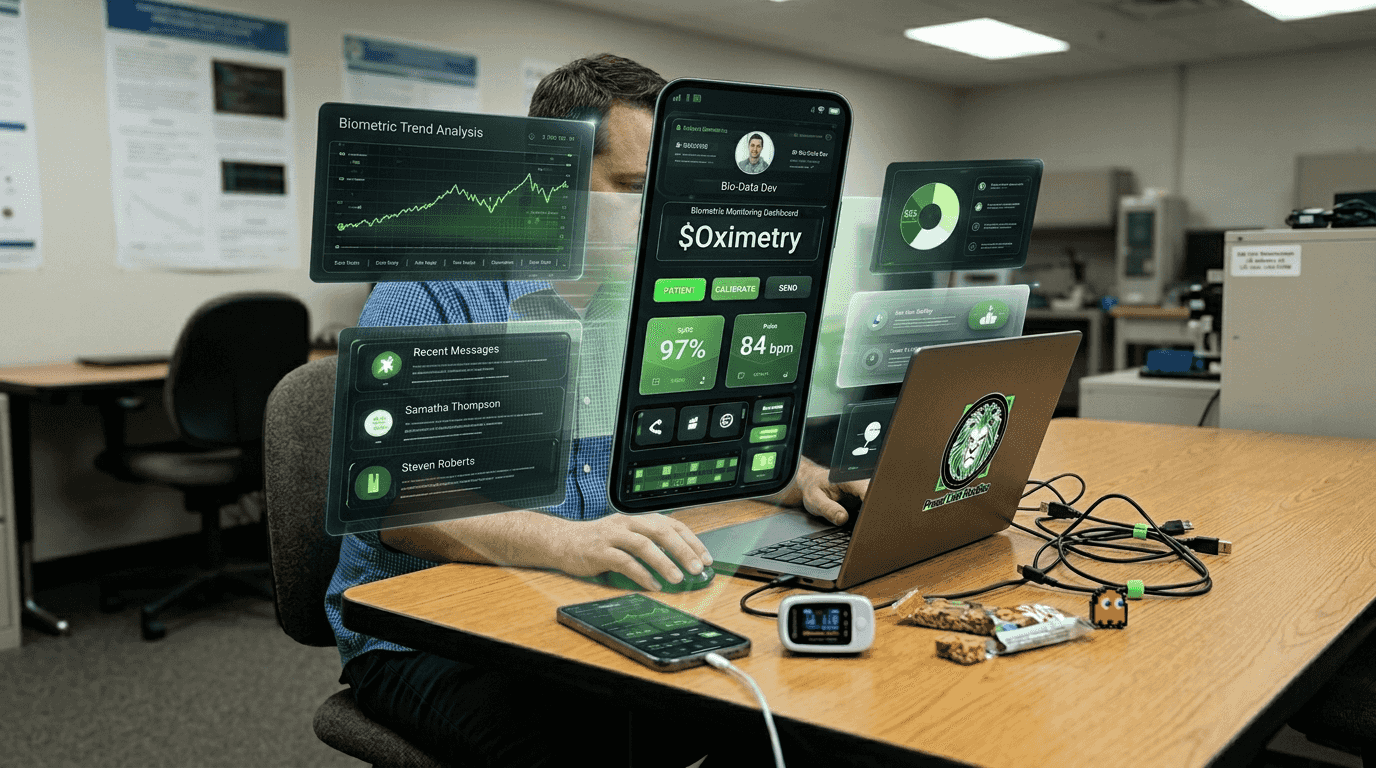
These are not minor inconveniences. When a healthcare app needs real-time Bluetooth communication with medical devices, a 200ms delay can render the feature unusable. When a fintech app experiences navigation crashes on iOS during critical transaction flows, user trust evaporates. Flutter's architecture, which prioritizes UI consistency over platform-specific optimization, hits a ceiling that Kotlin Multiplatform breaks through by allowing native code where performance is non-negotiable.
KMP takes a different approach. It shares business logic, data models, and networking code across platforms while letting developers write native Swift UI for iOS and Kotlin UI for Android. This means you get platform-optimized rendering, direct hardware API access, and zero abstraction penalty for performance-critical operations. You sacrifice some of Flutter's rapid UI prototyping speed, but you gain the ability to ship enterprise features that actually work under production load.
Organizational dynamics also favor KMP for JVM-based teams. If your backend runs on Kotlin or Java, sharing that expertise across mobile development reduces cognitive load and accelerates onboarding. Developers can move between backend services and mobile business logic without context switching to Dart or JavaScript. This architectural alignment pays compounding dividends as your team scales.
The shift from Flutter to Kotlin Multiplatform in 2026 is driven by the pursuit of true native quality without sacrificing the efficiency of shared business logic across platforms.
The decision to replace Flutter with KMP is not about Flutter being bad. It is about recognizing that different architectures solve different problems. For consumer apps prioritizing visual consistency and fast iteration, Flutter remains excellent. For enterprise systems demanding hardware integration, native performance, and long-term maintainability, KMP offers superior solutions that Flutter's abstraction cannot match.
- Bluetooth and NFC integrations require native APIs that Flutter abstracts poorly
- iOS navigation stack issues in Flutter can block critical user flows
- Serialization errors on Android devices reveal limitations of cross-platform rendering
- KMP allows surgical use of native code only where needed, reducing complexity
- JVM-based teams gain efficiency by sharing language expertise across backend and mobile
Integrating blockchain and AI automation in mobile app strategies for 2026
Blockchain integration is no longer experimental. Wallets like MetaMask demonstrate the scale blockchain mobile apps can achieve, with over 30 million monthly active users as of early 2024. The platform experienced a 55% user surge between September 2023 and January 2024, proving that users embrace blockchain features when the experience is seamless. This growth validates blockchain as a core component of mobile strategy, not a niche experiment.
For tech leaders planning 2026 roadmaps, blockchain enables new business models around digital asset ownership, decentralized identity, and transparent transactions. Users can own in-app purchases as NFTs, transfer value across applications without intermediaries, and verify credentials without central authorities. These capabilities unlock revenue streams and user engagement patterns impossible with traditional architectures.
AI automation complements blockchain by handling the complexity behind the scenes. Smart contract interactions can be automated based on user behavior, reducing friction. Natural language interfaces powered by AI agents can explain blockchain transactions in plain language, making crypto accessible to non-technical users. Backend processes like transaction monitoring, fraud detection, and personalized recommendations scale efficiently with AI, allowing small teams to deliver enterprise-grade experiences.
The combination of blockchain development and AI automation creates a multiplier effect. Blockchain provides trust and ownership, AI provides intelligence and scale. Together, they enable mobile apps that adapt to users, operate transparently, and create genuine value beyond ad-supported models.
- Identify use cases where ownership matters: Digital collectibles, credentials, or in-app assets that users should control independently of your platform.
- Design modular blockchain features: Start with simple wallet integration, then expand to smart contracts and decentralized storage as user adoption grows.
- Layer AI for user experience: Use AI to simplify blockchain interactions, explain transactions, and automate routine operations users would otherwise perform manually.
- Plan for scalability early: Blockchain transactions have latency and cost considerations that AI can optimize by batching operations or predicting user needs.
- Educate users progressively: Most users do not care about blockchain technology, they care about what it enables, so focus messaging on benefits like true ownership and portability.
These steps help you build mobile apps with AI and blockchain capabilities that feel native and intuitive rather than bolted on. The goal is not to showcase technology but to solve real user problems in ways traditional architectures cannot.
Pro Tip: Start blockchain integration early in your product roadmap with a modular architecture that isolates blockchain logic from core app features. This lets you iterate on crypto functionality without destabilizing your main user experience, and it prepares your codebase to scale as blockchain adoption accelerates.
Comparing development speed and productivity: Flutter vs Kotlin Multiplatform in 2026
Development speed matters when time to market determines competitive advantage. Flutter delivers measurable productivity gains for large enterprises, with companies like BMW, Alibaba, and Nubank achieving 30-35% faster development cycles compared to native development. This acceleration comes from Flutter's hot reload, unified codebase, and comprehensive widget library that eliminates much of the platform-specific work.
Kotlin Multiplatform optimizes differently. It accelerates business logic development by sharing code across platforms but requires native UI implementation for each platform. This means initial development may take longer than Flutter, but you avoid the technical debt and performance issues that emerge when Flutter's abstractions hit their limits. For apps where UI is straightforward but business logic is complex, KMP can match or exceed Flutter's speed.
The productivity equation changes over the app lifecycle. Flutter's speed advantage is front-loaded during initial development and prototyping. KMP's advantage compounds during maintenance, feature additions, and scaling when native access and performance matter more than rapid iteration. Teams report spending less time debugging platform-specific issues with KMP because they write platform-specific code intentionally rather than fighting an abstraction layer.
| Metric | Flutter | Kotlin Multiplatform | | --- | --- | | Initial development speed | 30-35% faster than native | 10-20% faster than native | | Iteration cycle | Extremely fast (hot reload) | Fast (shared logic, native UI) | | Debugging complexity | Moderate (abstraction issues) | Low (explicit platform code) | | Long-term maintenance | Higher (framework limitations) | Lower (native flexibility) |
Choosing the right framework depends on your specific constraints. If you need to validate a consumer app concept quickly and UI consistency is paramount, Flutter's speed advantage is decisive. If you are building a mobile app) that will scale to millions of users with complex backend integrations, KMP's architecture saves time in the long run despite slower initial velocity.
- Flutter excels for consumer apps with heavy UI focus and tight launch deadlines
- KMP wins for enterprise apps requiring native performance and hardware integration
- Teams with JVM expertise gain productivity with KMP through shared language and tooling
- React Native suits teams already invested in JavaScript who need moderate performance
- Consider total cost of ownership, not just initial development speed
The mobile app startup growth strategies you adopt in 2026 should account for both speed and sustainability. A framework that ships fast but requires a rewrite in 18 months costs more than a slower start with a solid foundation.
Pro Tip: Factor in your team's existing expertise and long-term maintenance costs when evaluating framework productivity. A 30% faster initial build means nothing if you spend that time savings debugging platform-specific issues for the next two years.
Discover expert mobile app, blockchain, and AI development services
Navigating the 2026 mobile landscape requires expertise across multiple cutting-edge domains. Proud Lion Studios delivers end-to-end mobile app development for iOS and Android), combining framework expertise with strategic guidance to help you choose the right architecture for your business goals. Whether you need native performance, cross-platform efficiency, or a hybrid approach, our Dubai-based team builds solutions tailored to your specific requirements.
Our blockchain development services extend beyond basic wallet integration to include smart contracts, NFT marketplaces, and Web3 applications that create genuine user value. We design blockchain features that feel native to your app, not bolted on. Complementing this, our AI automation solutions leverage intelligent agents and machine learning to streamline operations, personalize user experiences, and scale your app efficiently. Explore how we can help you build future-proof mobile applications that integrate the technologies shaping 2026 and beyond.
FAQ about the future of mobile apps in 2026
What is driving the shift from Flutter to Kotlin Multiplatform in 2026?
Flutter faces hardware integration and performance limits in enterprise contexts where apps need tight Bluetooth, NFC, or camera API access. KMP offers native UI and better integration for JVM developers sharing business logic across platforms without abstraction penalties. The shift is not about Flutter failing but about KMP solving problems Flutter's architecture cannot address.
How significant is blockchain integration for mobile apps today?
Blockchain mobile apps like MetaMask have tens of millions of active users, proving the technology has moved beyond experimentation. Blockchain features enable new user experiences around digital asset ownership, decentralized identity, and transparent transactions that traditional architectures cannot support. Integration is becoming standard for apps in finance, gaming, and social platforms.
Which framework offers the fastest development cycle for large enterprises?
Flutter enables 30-35% faster development cycles in several large companies like BMW and Alibaba compared to native development. KMP may require more native UI work, trading initial speed for long-term performance quality and maintainability. The fastest choice depends on whether your priority is time to first launch or total cost of ownership over the app lifecycle.
How can AI automation enhance mobile app user experience?
AI automates repetitive tasks like data entry, content moderation, and customer support, freeing users to focus on high-value interactions. It personalizes experiences by learning user preferences and predicting needs before they arise. AI improves scalability and responsiveness of mobile apps by handling backend complexity that would otherwise require larger engineering teams.
What factors should startups consider when planning their 2026 mobile app strategy?
Evaluate your team's existing skills and the framework trade-offs between development speed, performance, and long-term maintenance carefully. Leverage blockchain and AI automation where it aligns with your product vision and creates genuine user value, not just because the technology is trendy. Prioritize architectures that can scale with your user growth and evolving feature requirements without requiring rewrites.
Recommended
- Build mobile apps with AI, blockchain & game tech in 2026 - Software & Web3 Development in Dubai | Proud Lion Studios
- Build mobile apps with AI, blockchain & game tech in 2026
- Mobile apps in tech: startup growth strategies for 2026
- Mobile apps in tech: startup growth strategies for 2026 - Software & Web3 Development in Dubai | Proud Lion Studios
- Modern Enterprise Tech Stack Guide (2025): Building a Future-Proof Digital Architecture - devPulse